
Reading in Brazilian Portuguese
Written Portuguese is closer to Spanish than most people expect. Spoken Brazilian Portuguese is much further away. Reading is where you start.
As folhas caem no outono.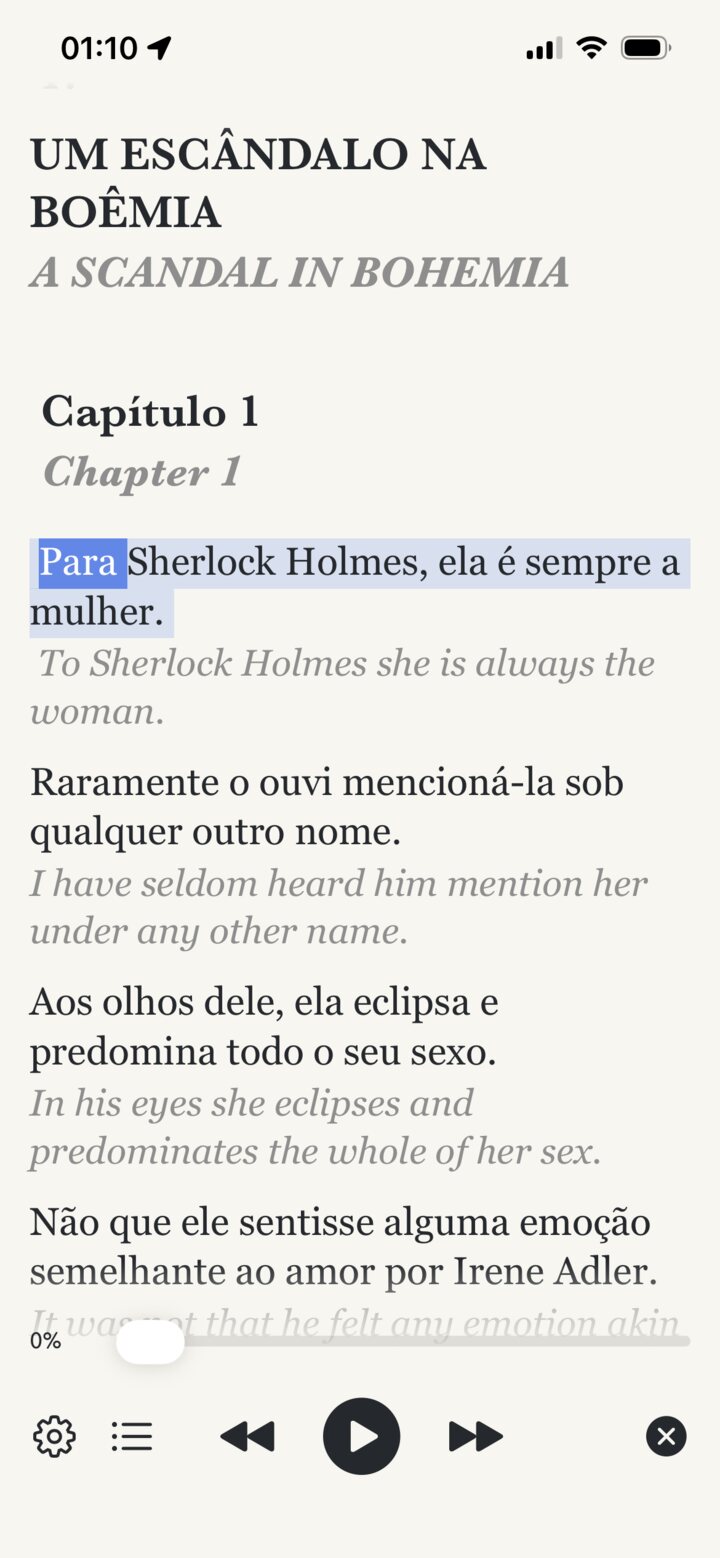
What reading Brazilian Portuguese is actually like
On the page, Portuguese and Spanish are close relatives — a reader of one can often follow the gist of the other. If you have any Spanish at all, Portuguese reading starts well above zero.
Spoken Brazilian Portuguese is another matter. It elides, softens and reshapes words in ways the spelling does not record, which is why learners routinely report reading comfortably long before they can follow a conversation. Reading with narration is the bridge across that gap.
Brazilian and European Portuguese differ in pronunciation, some vocabulary and a little grammar. The material here is Brazilian, which is what the app teaches.
- Nasal vowels have no English equivalent
- ão, ã and õ are sounds English simply does not make. Seeing them on the page while hearing them is far more effective than any written description, including this one.
- Close to Spanish, not identical
- The overlap is large and the differences are small and constant, which is its own trap: the words you get wrong are the ones you were sure of.
- The written accent does real work
- avô is grandfather, avó is grandmother. The mark is the whole difference.
How much Brazilian Portuguese can you read already?
Six real sentences, easiest first. Read each one, and reveal the meaning when you want it. In a book the translation is simply always there — this hides it so you can see where you stand. It is a gauge, not a placement test.
Sentence 1 of 6
0 understood
Minha cabeça dói.
Your first 48 words in Brazilian Portuguese
Every entry carries a real sentence and its translation, because a word on its own is much harder to keep than a word in use. Read them here; the app has over 1,400 more.
Greetings
| Brazilian Portuguese | English | In a sentence |
|---|---|---|
| oláoh-lah | hello/hi | Olá! Como vai?Hello! How are you? |
| oioy | hi | Oi, tudo bem?Hi, how are you? |
| bom diabohm dee-ah | good morning | Bom dia! Dormiu bem?Good morning! Did you sleep well? |
| boa tardeboh-ah tahr-deh | good afternoon | Boa tarde! Como está?Good afternoon! How are you? |
| boa noiteboh-ah noy-teh | good evening/night | Boa noite! Durma bem.Good night! Sleep well. |
| tchauchow | bye | Tchau! Até logo!Bye! See you later! |
| adeusah-deh-oos | goodbye | Adeus, meu amigo.Goodbye, my friend. |
| até logoah-teh loh-goo | see you later | Até logo! Volto já.See you later! I'll be right back. |
Numbers
| Brazilian Portuguese | English | In a sentence |
|---|---|---|
| zeroZEH-roh | zero | Tenho zero reais.I have zero reais. |
| umoom | one | Comprei um livro.I bought one book. |
| doisdoys | two | Tenho dois irmãos.I have two brothers. |
| trêstrehs | three | São três horas.It's three o'clock. |
| quatroKWAH-troh | four | Temos quatro gatos.We have four cats. |
| cincoSEEN-koh | five | Cinco mais cinco é dez.Five plus five is ten. |
| seissays | six | Acordo às seis.I wake up at six. |
| seteSEH-chee | seven | São sete dias.It's seven days. |
Family
| Brazilian Portuguese | English | In a sentence |
|---|---|---|
| famíliafah-mee-lee-ah | family | Minha família é grande.My family is big. |
| paipah-ee | father | Meu pai trabalha muito.My father works a lot. |
| mãemah-ee | mother | Minha mãe cozinha bem.My mother cooks well. |
| irmãoeer-mow | brother | Tenho um irmão mais velho.I have an older brother. |
| irmãeer-mah | sister | Minha irmã é professora.My sister is a teacher. |
| filhofee-lyoo | son | Meu filho tem cinco anos.My son is five years old. |
| filhafee-lyah | daughter | Minha filha estuda medicina.My daughter studies medicine. |
| avôah-voh | grandfather | Meu avô tem oitenta anos.My grandfather is eighty years old. |
Food & Drinks
| Brazilian Portuguese | English | In a sentence |
|---|---|---|
| águaAH-gwah | water | Quero um copo de água.I want a glass of water. |
| pãopow | bread | O pão está fresco.The bread is fresh. |
| leiteLAY-chee | milk | Bebo leite toda manhã.I drink milk every morning. |
| ovoOH-voh | egg | Como ovos no café da manhã.I eat eggs for breakfast. |
| carneKAHR-nee | meat | A carne está deliciosa.The meat is delicious. |
| frangoFRAN-goh | chicken | O frango assado é meu favorito.Roasted chicken is my favorite. |
| peixePAY-shee | fish | O peixe é saudável.Fish is healthy. |
| arrozah-HOSE | rice | O arroz está pronto.The rice is ready. |
Colors
| Brazilian Portuguese | English | In a sentence |
|---|---|---|
| vermelhovehr-meh-lyoo | red | O carro vermelho é rápido.The red car is fast. |
| azulah-zool | blue | O céu é azul.The sky is blue. |
| verdevehr-deh | green | A grama é verde.The grass is green. |
| amareloah-mah-reh-loo | yellow | O sol é amarelo.The sun is yellow. |
| laranjalah-rahn-zhah | orange | Gosto da cor laranja.I like the color orange. |
| roxohoh-shoo | purple | Ela usa um vestido roxo.She wears a purple dress. |
| rosahoh-zah | pink | As flores são rosas.The flowers are pink. |
| pretopreh-too | black | O gato preto dorme.The black cat sleeps. |
Days & Months
| Brazilian Portuguese | English | In a sentence |
|---|---|---|
| segunda-feiraseh-goon-dah fay-rah | Monday | Segunda-feira é o primeiro dia da semana.Monday is the first day of the week. |
| terça-feiratehr-sah fay-rah | Tuesday | Vou ao cinema na terça-feira.I'm going to the cinema on Tuesday. |
| quarta-feirakwahr-tah fay-rah | Wednesday | Quarta-feira é meio da semana.Wednesday is mid-week. |
| quinta-feirakeen-tah fay-rah | Thursday | A reunião é na quinta-feira.The meeting is on Thursday. |
| sexta-feirasehs-tah fay-rah | Friday | Sexta-feira é o início do fim de semana.Friday is the start of the weekend. |
| sábadosah-bah-doo | Saturday | Sábado, vamos ao mercado.On Saturday, we go to the market. |
| domingodoh-meen-goo | Sunday | Domingo é um dia de descanso.Sunday is a day of rest. |
| janeirozhah-nay-roo | January | Janeiro é o primeiro mês do ano.January is the first month of the year. |
Then read a whole book
Word lists run out. 61 books, each sentence printed with English directly beneath it and every book graded by reading difficulty, so you can start one before you feel ready. The device above is Um escândalo na Boêmia — Conan Doyle’s first Sherlock Holmes story, in Brazilian Portuguese.
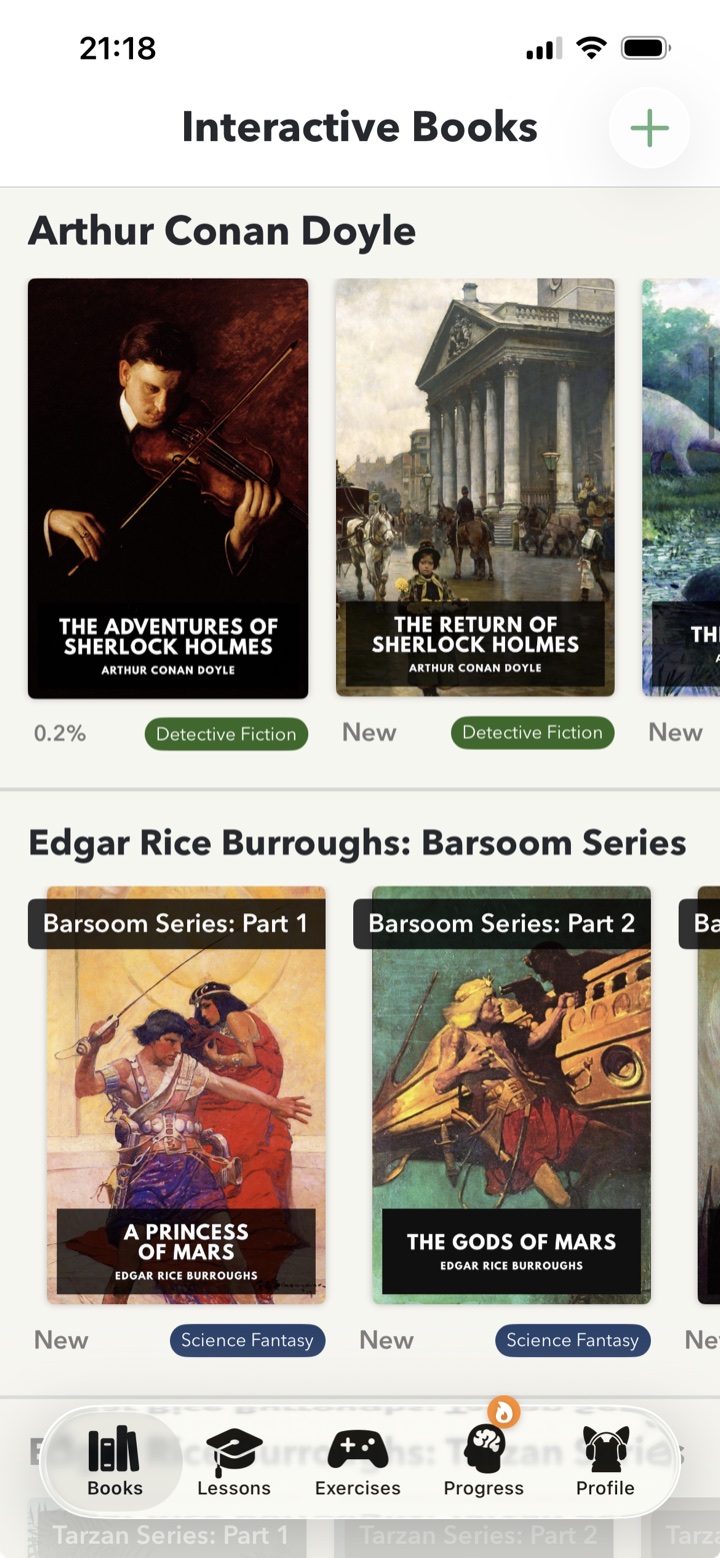
- The Adventures of Tom SawyerMark TwainEasy
- The Adventures of Sherlock HolmesArthur Conan DoyleEasy
- The Wonderful Wizard of OzL. Frank BaumEasy
- A Christmas CarolCharles DickensEasy
- Peter PanJ. M. BarrieEasy
- The Adventures of PinocchioCarlo CollodiEasy
Read your first Brazilian Portuguese book
Free on the App Store

Scan to install on your iPhone