
Reading in Spanish
Spanish is the language where reading pays off fastest. Here is what to expect, and the first words worth knowing.
El río fluye hacia el mar.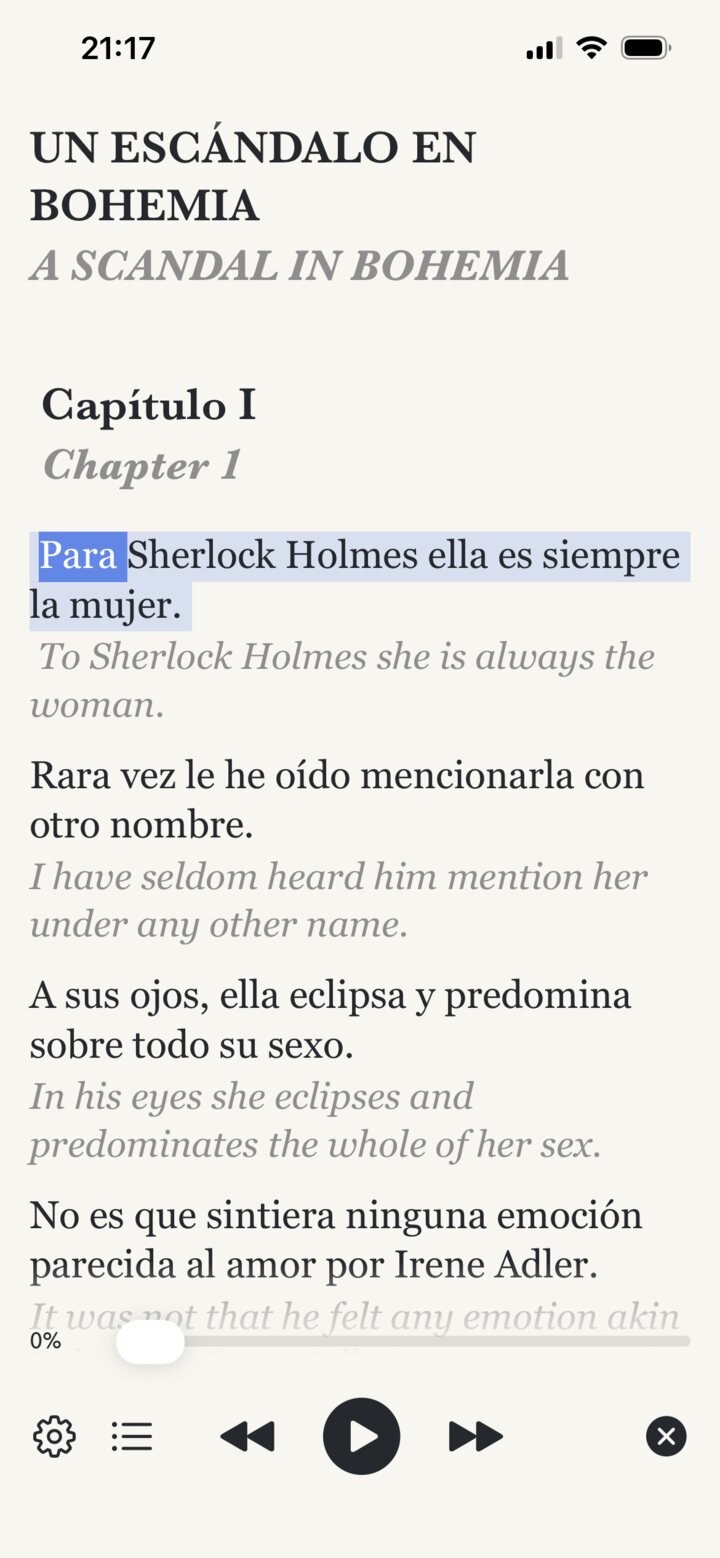
What reading Spanish is actually like
Spanish is close to phonetic: once you know the rules, you can pronounce almost any written word correctly on sight, and there are very few exceptions. That single fact makes it the easiest major language on this list to start reading, because the page and the sound never contradict each other.
You also start with a large free vocabulary. Centuries of shared Latin roots mean hospital, animal, natural, familia, and thousands of others arrive already understood. Early reading feels less like decoding and more like recognising.
The difficulty arrives later, in the verbs. Spanish conjugates heavily, and the subjunctive has no clean English equivalent. But none of that blocks reading — you can follow a story long before you could write one.
- Every noun has a gender
- el libro is masculine, la mesa feminine, and the articles and adjectives around them change to match. Reading teaches this by exposure faster than any table will.
- Two verbs mean "to be"
- ser for what something is, estar for how or where it is. Getting them wrong is the most common beginner mistake and the fastest one to fix by reading.
- Punctuation warns you early
- ¿ and ¡ open questions and exclamations, so you know the tone of a sentence before you have read it.
How much Spanish can you read already?
Six real sentences, easiest first. Read each one, and reveal the meaning when you want it. In a book the translation is simply always there — this hides it so you can see where you stand. It is a gauge, not a placement test.
Sentence 1 of 6
0 understood
Levanta el brazo.
Your first 48 words in Spanish
Every entry carries a real sentence and its translation, because a word on its own is much harder to keep than a word in use. Read them here; the app has over 1,400 more.
Greetings
| Spanish | English | In a sentence |
|---|---|---|
| holaOH-lah | hello | ¡Hola! ¿Cómo estás?Hello! How are you? |
| buenos díasBWEH-nohs DEE-ahs | good morning | Buenos días, señora.Good morning, ma'am. |
| buenas tardesBWEH-nahs TAHR-dehs | good afternoon | Buenas tardes a todos.Good afternoon everyone. |
| buenas nochesBWEH-nahs NOH-chehs | good evening/night | Buenas noches, hasta mañana.Good night, see you tomorrow. |
| adiósah-DYOHS | goodbye | Adiós, nos vemos pronto.Goodbye, see you soon. |
| hasta luegoAHS-tah LWEH-goh | see you later | Hasta luego, amigo.See you later, friend. |
| hasta mañanaAHS-tah mah-NYAH-nah | see you tomorrow | Hasta mañana en clase.See you tomorrow in class. |
| ¿cómo estás?KOH-moh ehs-TAHS | how are you? | Hola, ¿cómo estás hoy?Hello, how are you today? |
Numbers
| Spanish | English | In a sentence |
|---|---|---|
| unoOO-noh | one | Tengo un libro.I have one book. |
| dosdohs | two | Hay dos gatos.There are two cats. |
| trestrehs | three | Tres manzanas.Three apples. |
| cuatroKWAH-troh | four | Cuatro estaciones.Four seasons. |
| cincoSEEN-koh | five | Cinco dedos.Five fingers. |
| seissayss | six | Seis huevos.Six eggs. |
| sieteSYEH-teh | seven | Siete días.Seven days. |
| ochoOH-choh | eight | Ocho horas.Eight hours. |
Family
| Spanish | English | In a sentence |
|---|---|---|
| familiafah-MEE-lyah | family | Mi familia es grande.My family is big. |
| padrePAH-dreh | father | Mi padre trabaja mucho.My father works a lot. |
| madreMAH-dreh | mother | Mi madre cocina bien.My mother cooks well. |
| hijoEE-hoh | son | Es su único hijo.He is their only son. |
| hijaEE-hah | daughter | Su hija es doctora.Their daughter is a doctor. |
| hermanoehr-MAH-noh | brother | Tengo un hermano mayor.I have an older brother. |
| hermanaehr-MAH-nah | sister | Mi hermana vive en Madrid.My sister lives in Madrid. |
| abueloah-BWEH-loh | grandfather | Mi abuelo tiene 80 años.My grandfather is 80 years old. |
Food & Drinks
| Spanish | English | In a sentence |
|---|---|---|
| aguaAH-gwah | water | Quiero un vaso de agua.I want a glass of water. |
| panpahn | bread | El pan está fresco.The bread is fresh. |
| lecheLEH-cheh | milk | Bebo leche cada mañana.I drink milk every morning. |
| huevoWEH-boh | egg | Como huevos para el desayuno.I eat eggs for breakfast. |
| carneKAHR-neh | meat | La carne está deliciosa.The meat is delicious. |
| polloPOH-yoh | chicken | El pollo asado es mi favorito.Roasted chicken is my favorite. |
| pescadopehs-KAH-doh | fish | El pescado es saludable.Fish is healthy. |
| arrozah-RROHS | rice | El arroz está listo.The rice is ready. |
Colors
| Spanish | English | In a sentence |
|---|---|---|
| rojoROH-hoh | red | El coche rojo es rápido.The red car is fast. |
| azulah-SOOL | blue | El cielo es azul.The sky is blue. |
| verdeBEHR-deh | green | La hierba es verde.The grass is green. |
| amarilloah-mah-REE-yoh | yellow | El sol es amarillo.The sun is yellow. |
| naranjanah-RAHN-hah | orange | Me gusta el color naranja.I like the color orange. |
| moradomoh-RAH-doh | purple | Las uvas son moradas.The grapes are purple. |
| rosaROH-sah | pink | La flor es rosa.The flower is pink. |
| blancoBLAHN-koh | white | La nieve es blanca.The snow is white. |
Days & Months
| Spanish | English | In a sentence |
|---|---|---|
| lunesLOO-nehs | Monday | El lunes voy al trabajo.On Monday I go to work. |
| martesMAHR-tehs | Tuesday | El martes tengo clase.On Tuesday I have class. |
| miércolesMYEHR-koh-lehs | Wednesday | El miércoles es mi día favorito.Wednesday is my favorite day. |
| juevesHWEH-behs | Thursday | El jueves vamos al cine.On Thursday we go to the movies. |
| viernesBYEHR-nehs | Friday | El viernes es el último día de trabajo.Friday is the last workday. |
| sábadoSAH-bah-doh | Saturday | El sábado descansamos.On Saturday we rest. |
| domingodoh-MEEN-goh | Sunday | El domingo visitamos a la familia.On Sunday we visit family. |
| eneroeh-NEH-roh | January | Enero es el primer mes del año.January is the first month of the year. |
Then read a whole book
Word lists run out. 61 books, each sentence printed with English directly beneath it and every book graded by reading difficulty, so you can start one before you feel ready. The device above is Un escándalo en Bohemia — Conan Doyle’s first Sherlock Holmes story, in Spanish.
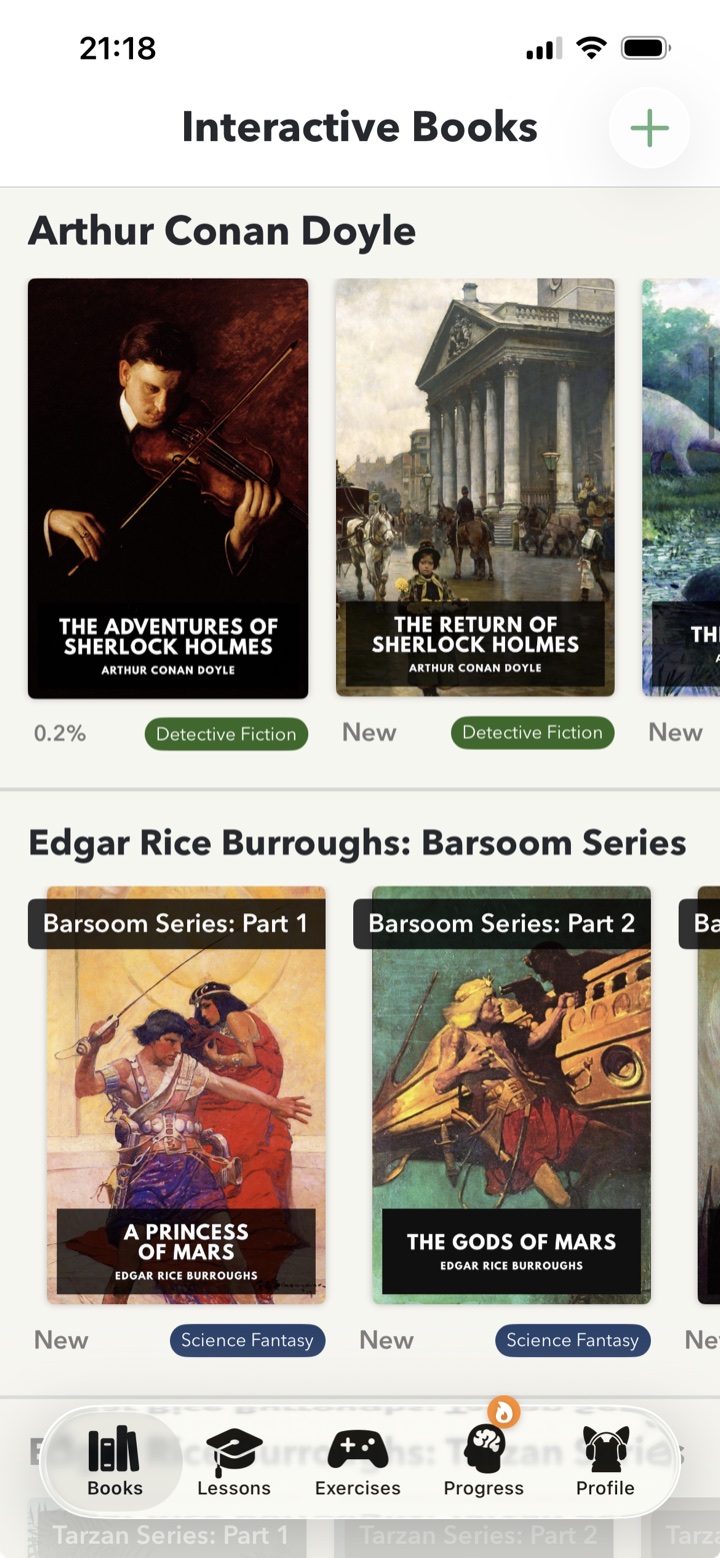
- The Adventures of Tom SawyerMark TwainEasy
- The Adventures of Sherlock HolmesArthur Conan DoyleEasy
- The Wonderful Wizard of OzL. Frank BaumEasy
- A Christmas CarolCharles DickensEasy
- Peter PanJ. M. BarrieEasy
- The Adventures of PinocchioCarlo CollodiEasy
Read your first Spanish book
Free on the App Store

Scan to install on your iPhone