Reading in Russian
The alphabet looks like the hard part and is the easy part. Here is what the first weeks of reading Russian actually involve.
Ручей имеет кристальную воду.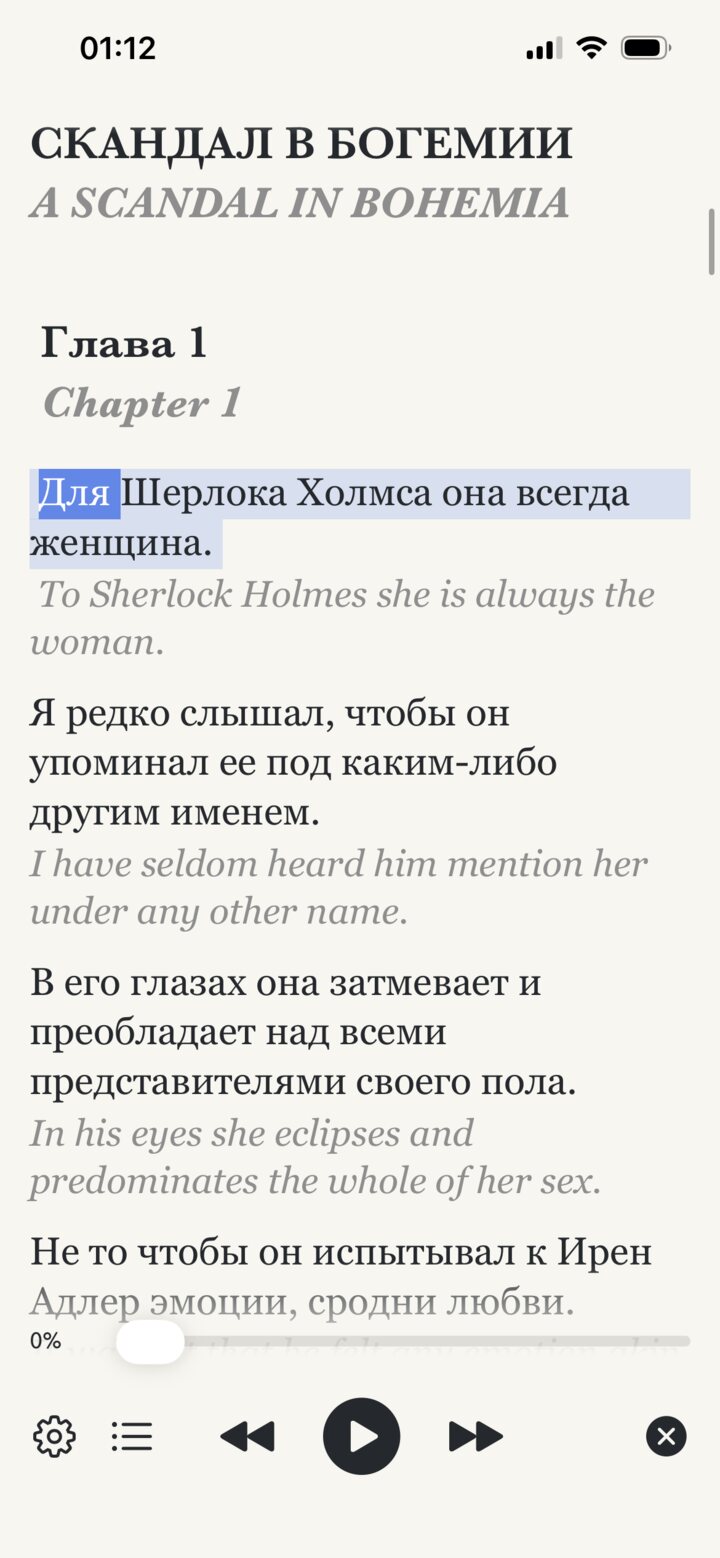
What reading Russian is actually like
Cyrillic is a wall that turns out to be a low one. It is 33 letters, many of them shared with the Latin alphabet, and most learners can decode simple words within a few days. It feels like the obstacle because it is the visible one.
Once you can read the letters, Russian spelling is fairly regular — considerably more so than English. Words are largely written as they sound, with predictable exceptions.
The genuine difficulty is grammatical. Russian has six cases, so nouns change their endings depending on their role in the sentence, and there are no articles at all — no "a", no "the". Reading is how you build a feel for which ending means what, because a table of six cases teaches you far less than a hundred pages of seeing them used.
- Some letters are false friends
- Р is r, С is s, В is v, Н is n, У is u. The letters that look most familiar are the ones most likely to trip you, so learn those first.
- No articles at all
- There is no word for "a" or "the". Context does that work, which reads as terse at first and becomes natural quickly.
- Stress is unmarked and it matters
- Russian stress moves around and is not written in ordinary text. This is the strongest argument for reading with audio rather than reading alone.
How much Russian can you read already?
Six real sentences, easiest first. Read each one, and reveal the meaning when you want it. In a book the translation is simply always there — this hides it so you can see where you stand. It is a gauge, not a placement test.
Sentence 1 of 6
0 understood
Корова даёт молоко.
Your first 48 words in Russian
Every entry carries a real sentence and its translation, because a word on its own is much harder to keep than a word in use. Read them here; the app has 1,600 more.
Greetings
| Russian | English | In a sentence |
|---|---|---|
| здравствуйтеZDRAV-stvooy-te | hello (formal) | Здравствуйте, как дела?Hello, how are you? |
| приветpri-VET | hi/hello | Привет! Как ты?Hi! How are you? |
| доброе утроDOB-ro-ye U-tro | good morning | Доброе утро! Как спалось?Good morning! How did you sleep? |
| добрый деньDOB-ry den' | good afternoon | Добрый день! Рад вас видеть.Good afternoon! Nice to see you. |
| добрый вечерDOB-ry VE-cher | good evening | Добрый вечер, как прошёл день?Good evening, how was your day? |
| спокойной ночиspo-KOY-noy NO-chi | good night | Спокойной ночи, спи хорошо.Good night, sleep well. |
| до свиданияdo svi-DA-ni-ya | goodbye | До свидания! До встречи!Goodbye! See you! |
| покаpo-KA | bye | Пока! Увидимся завтра!Bye! See you tomorrow! |
Numbers
| Russian | English | In a sentence |
|---|---|---|
| нольnol' | zero | Ноль градусов.Zero degrees. |
| одинo-DIN | one | Один человек.One person. |
| дваdva | two | Два яблока.Two apples. |
| триtri | three | Три дня.Three days. |
| четыреche-TY-re | four | Четыре часа.Four hours. |
| пятьpyat' | five | Пять рублей.Five rubles. |
| шестьshest' | six | Шесть книг.Six books. |
| семьsem' | seven | Семь дней.Seven days. |
Family
| Russian | English | In a sentence |
|---|---|---|
| семьяsem'-YA | family | Моя семья большая.My family is big. |
| матьmat' | mother | Моя мать работает врачом.My mother works as a doctor. |
| отецo-TETS | father | Мой отец инженер.My father is an engineer. |
| мамаMA-ma | mom | Мама дома.Mom is at home. |
| папаPA-pa | dad | Папа на работе.Dad is at work. |
| родителиro-DI-te-li | parents | Мои родители живут в Москве.My parents live in Moscow. |
| сынsyn | son | У меня есть сын.I have a son. |
| дочьdoch' | daughter | Моя дочь учится в школе.My daughter studies at school. |
Food & Drinks
| Russian | English | In a sentence |
|---|---|---|
| хлебkhleb | bread | Я купил свежий хлеб.I bought fresh bread. |
| водаvo-DA | water | Можно стакан воды?Can I have a glass of water? |
| молокоmo-lo-KO | milk | Я пью молоко каждый день.I drink milk every day. |
| чайchay | tea | Я люблю чай с лимоном.I love tea with lemon. |
| кофеKO-fe | coffee | Утром я пью кофе.I drink coffee in the morning. |
| сокsok | juice | Апельсиновый сок вкусный.Orange juice is delicious. |
| виноvi-NO | wine | Красное вино.Red wine. |
| пивоPI-vo | beer | Холодное пиво.Cold beer. |
Colors
| Russian | English | In a sentence |
|---|---|---|
| красныйKRAS-ny | red | Красный автомобиль.A red car. |
| синийSI-niy | blue | Синее небо.Blue sky. |
| зелёныйze-LYO-ny | green | Зелёная трава.Green grass. |
| жёлтыйZHOL-ty | yellow | Жёлтое солнце.Yellow sun. |
| белыйBE-ly | white | Белый снег.White snow. |
| чёрныйCHOR-ny | black | Чёрный кот.Black cat. |
| оранжевыйo-RAN-zhe-vy | orange | Оранжевый апельсин.Orange orange. |
| розовыйRO-zo-vy | pink | Розовые цветы.Pink flowers. |
Days & Months
| Russian | English | In a sentence |
|---|---|---|
| понедельникpo-ne-DEL'-nik | Monday | В понедельник я работаю.I work on Monday. |
| вторникFTOR-nik | Tuesday | Вторник — второй день недели.Tuesday is the second day of the week. |
| средаsre-DA | Wednesday | В среду у меня встреча.I have a meeting on Wednesday. |
| четвергchet-VERK | Thursday | Четверг — мой любимый день.Thursday is my favorite day. |
| пятницаPYAT-ni-tsa | Friday | В пятницу я отдыхаю.I rest on Friday. |
| субботаsub-BO-ta | Saturday | Суббота — выходной день.Saturday is a day off. |
| воскресеньеvos-kre-SEN'-ye | Sunday | В воскресенье мы отдыхаем.We rest on Sunday. |
| январьyan-VAR' | January | Январь — первый месяц.January is the first month. |
Then read a whole book
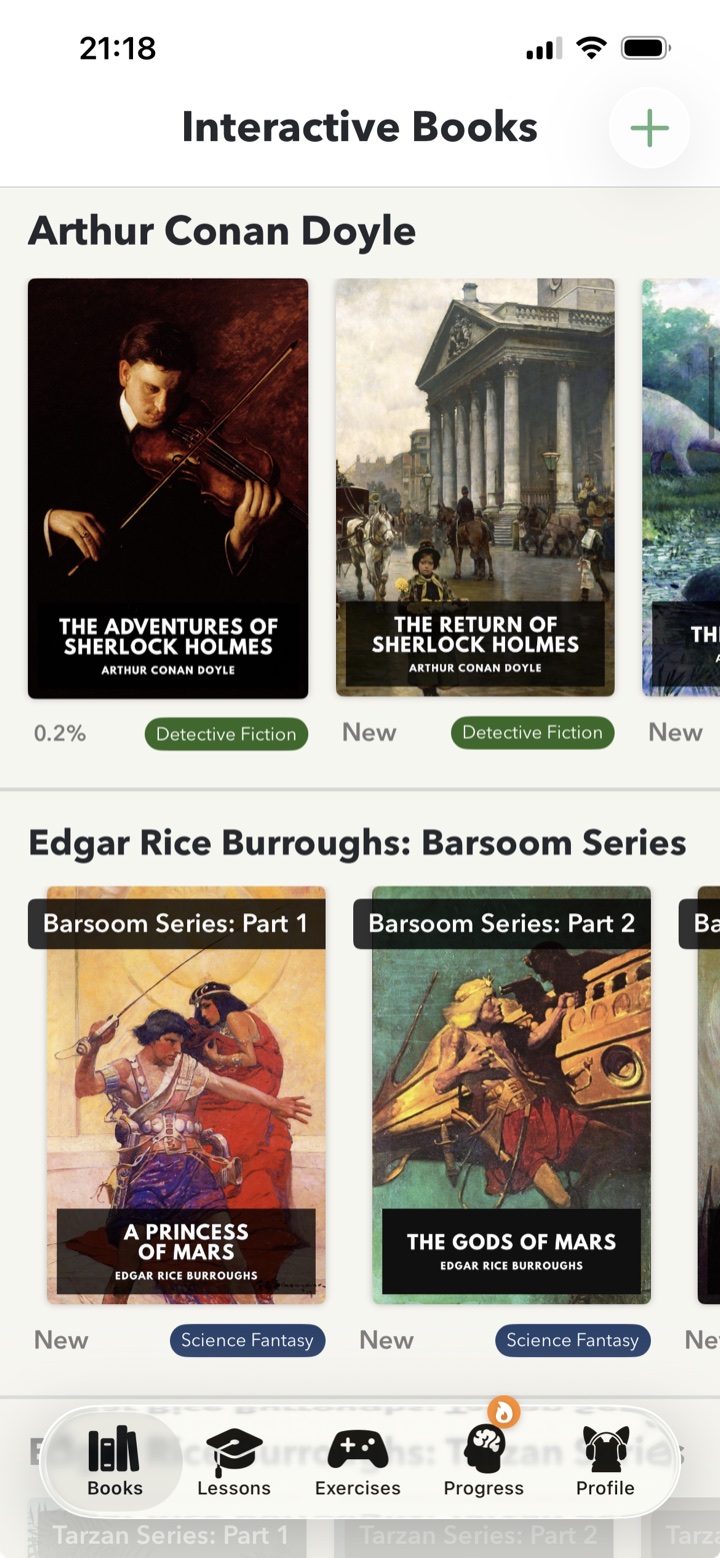
Word lists run out. 61 books, each sentence printed with English directly beneath it and every book graded by reading difficulty, so you can start one before you feel ready. The device above is Скандал в Богемии — Conan Doyle’s first Sherlock Holmes story, in Russian.
- The Adventures of Tom SawyerMark TwainEasy
- The Adventures of Sherlock HolmesArthur Conan DoyleEasy
- The Wonderful Wizard of OzL. Frank BaumEasy
- A Christmas CarolCharles DickensEasy
- Peter PanJ. M. BarrieEasy
- The Adventures of PinocchioCarlo CollodiEasy
Read your first Russian book
Free on the App Store

Scan to install on your iPhone